

In 2026, Africa stands at a defining moment in its digital transformation journey. Artificial intelligence, cloud computing, cybersecurity, data science, and digital entrepreneurship are reshaping economies, creating new industries, and redefining the future of work. Across the continent, governments, startups, universities, and development organizations are investing heavily in technology as a driver of economic growth. Yet one critical question remains: Who gets to build the future? For all the conversations around innovation and digital transformation, women remain significantly underrepresented in Africa’s tech talent pipeline, especially in leadership, advanced technical roles, and decision-making spaces.
According to the United Nation’s recent figures shared during the Joint Commemoration of the International Day of Women and Girls in Science and International Girls in ICT Day 2026, women hold less than 20% of senior technology leadership positions in Africa. While many African countries have made progress in expanding access to STEM education for girls and women, the transition from education to employment and leadership remains deeply unequal.
Women now earn close to half of STEM-related degrees in some African countries, yet they represent only about 30% of STEM-related jobs continent-wide. Participation in advanced STEM pathways still ranges between 20% and 30%, revealing the structural barriers that continue to push women out of technology careers before they can fully thrive.
This is not just a gender issue. It is an innovation issue, an economic issue, and a development issue.
Africa’s Growing Tech Economy Needs More Women
Africa’s tech ecosystem is growing rapidly. From fintech in Nigeria and Kenya, to AI innovation hubs in Rwanda and South Africa, to startup ecosystems emerging in Cameroon, Ghana, and Senegal, the continent is producing a new generation of builders and innovators.
But while the demand for digital talent continues to rise, the talent pool itself remains uneven.
Women continue to face barriers at nearly every stage of the pipeline:
- Limited access to quality digital education
- Lack of exposure to technology careers
- Poor internet access and digital infrastructure
- Cultural stereotypes about women in STEM
- Low mentorship and representation
- Limited access to funding and professional networks
- Workplace bias and unequal opportunities for advancement
In many African communities, especially rural and crisis-affected regions, technology education is still considered inaccessible or reserved for a select few. Young girls often complete secondary school without ever touching a computer or understanding the opportunities available in digital careers. The result is a shrinking pipeline of women entering the tech workforce, and an even smaller number rising into leadership.
The Problem Is Bigger Than Representation
The challenge facing women in technology is not simply about numbers.
It is about access.
It is about confidence.
It is about opportunity.
And increasingly, it is about whether Africa’s digital future will be inclusive or exclusionary.
Artificial intelligence and emerging technologies are now shaping healthcare, education, governance, communication, finance, agriculture, and creative industries. If women are excluded from building these systems, then the technologies shaping the future may fail to represent the realities and needs of half the population.
We are already seeing examples globally where biased AI systems, unequal datasets, and male-dominated design teams have created products that unintentionally exclude women.
Africa cannot afford to repeat the same mistakes.
The continent’s digital future must be built by diverse voices, experiences, and perspectives.
The Reality for Women in Cameroon
Cameroon reflects many of the broader challenges facing women in technology across Africa. While internet penetration and digital awareness are growing, access remains unequal, especially for women and girls in underserved communities. In the South West and North West regions particularly, the ongoing socio-political crisis has disrupted education, displaced families, and widened existing inequalities. Many young women have had their educational journeys interrupted entirely.
For some girls, access to a computer labs remain rare.
For others, technology careers still feel distant and unattainable.
At the same time, Cameroon’s digital economy continues to expand. Employers increasingly require digital skills across industries, from communication and administration to design, data, and AI-assisted productivity.
The challenge is no longer whether digital skills matter.
The challenge is whether women are being equipped quickly enough to participate meaningfully in the opportunities emerging around them.
Data Girl Technologies’ Approach to Solving the Problem in 2026
At Data Girl Technologies, we believe Africa’s digital transformation cannot succeed if women are left behind. Since 2020, our mission has been the same:
Equip women and girls with practical digital and technology skills that create real economic opportunities.
What began as a shared conviction between two women who discovered technology later in life has now grown into one of Cameroon’s leading women-led technology empowerment organizations. In 2026, our approach goes beyond traditional tech training.
We are focused on building a complete ecosystem that helps women move from curiosity to competence, and from competence to career opportunities.
1. Hands-On Tech Bootcamps
Our bootcamps are designed around practical, project-based learning.
Rather than focusing only on theory, participants learn by building real projects, solving real problems, and using tools relevant to today’s digital economy.
In 2026, Data Girl Technologies continues expanding its bootcamp programs to equip women with skills that align directly with emerging workforce demands, especially in AI-assisted productivity and digital innovation.
Our training model focuses on:
- Practical application
- Mentorship-driven learning
- Portfolio development
- Career readiness
- Entrepreneurship support
- Exposure to global digital opportunities
The goal is not simply to train women, the goal is to prepare women for the future of work.
2. The Women in STEM (WiSTEM) Conference
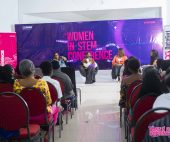
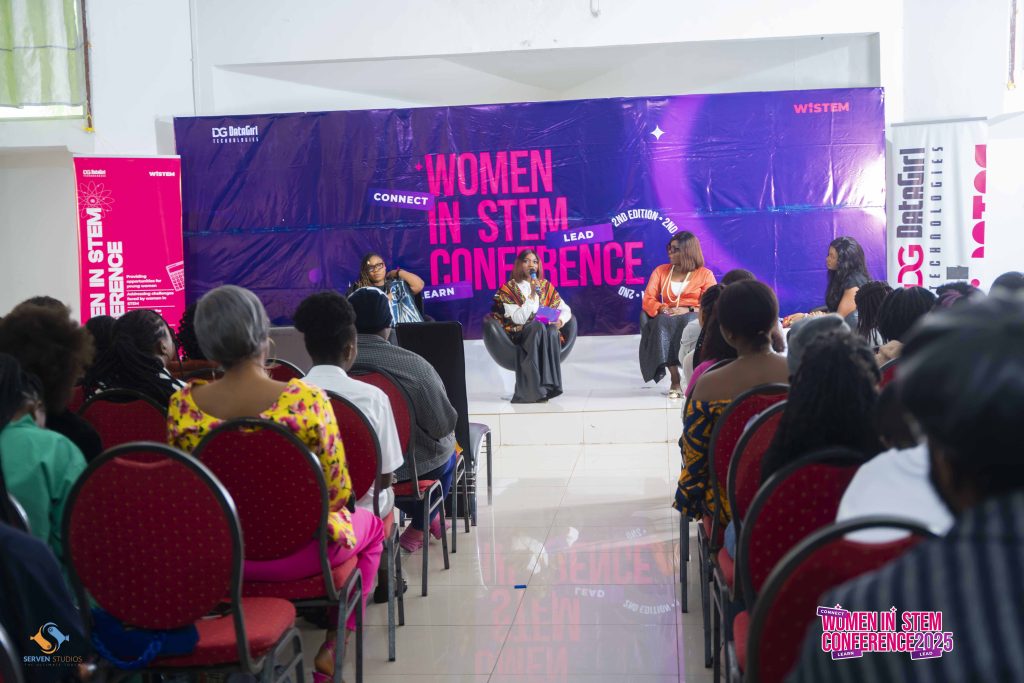
In 2024, Data Girl Technologies launched the Women in STEM (WiSTEM) Conference, now one of Cameroon’s leading platforms dedicated to women in technology and innovation.
Across two editions, WiSTEM has already reached more than 1,000 women and girls through workshops, networking sessions, hackathon, and innovation conversations.
The 2026 edition of WiSTEM focuses on the theme:
“Accelerating STEM Education and AI Innovation for Women.”
WiSTEM 2026 will convene up to 2,000 participants through:
- AI and emerging technology workshops
- All-women hackathon
- Policy conversations
- Career fair
- Mentorship and networking opportunities
- Women-led innovation showcases
The conference creates a space where women are not just attendees, but builders, innovators, founders, and decision-makers shaping Africa’s AI-driven economy.
3. The STEM Reach Project
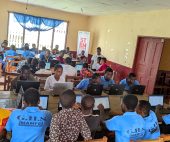
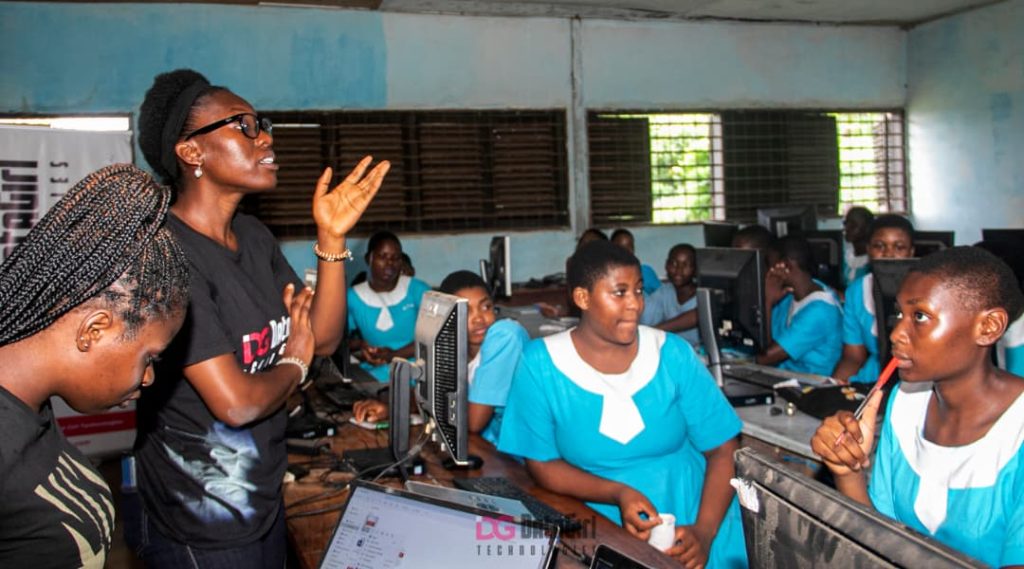
One of Data Girl Technologies’ most impactful initiatives remains the STEM Reach Project. The project takes technology training directly into underserved and crisis-affected communities using a mobile STEM learning model. Between 2024 and 2025, STEM Reach was implemented in:
Through this initiative, over 200 women and girls with little or no prior access to digital education received practical digital training. And the impact has been massive.
In Mamfe, secondary school students who had barely accessed computer labs achieved a 100% success rate in Computer Science examinations after the STEM Reach intervention.
In other communities, women gained digital skills that opened doors to employment, freelancing, entrepreneurship, and financial independence.
In 2026, Data Girl Technologies aims to scale the STEM Reach model to more communities, schools, and institutions across Cameroon.

Building the Future Africa Needs
Africa’s future will be shaped by technology. But technology alone is not enough.
The real question is whether the continent will intentionally build systems that allow women and girls to participate fully in that future. Closing the gender gap in technology requires more than conversations. It requires:
- Access to quality digital education
- Visible female role models
- Mentorship and community support
- Investment in women-led innovation
- Policy support for inclusion
- Intentional partnerships across sectors
- Grassroots interventions reaching underserved communities
At Data Girl Technologies, we believe the solution must start early, remain practical, and stay community-centered. Because when women gain access to technology, they do not only change their own lives, they transform families, communities, industries, and economies. The future of Africa’s tech talent pool depends on whether we are willing to build inclusive systems today. And in 2026, that work can no longer wait.